
The global stage of the United Nations General Assembly (UNGA)...
Read MoreEvidence suggests that Maternal Multiple Micronutrient Supplementation (MMS) is more cost-effective and yield 2-3X more Disability adjusted life years (DALY) than the traditional iron-folic acid supplements (IFAS)
Increasing adherence to MMS can accelerate national progress towards reducing Anemia, low birth weight and stunting.
This Implementation Research project explores opportunities to increase adherence to MMS as the gold standard for supporting women’s decision-making ability. This can consequently promote consistent, comprehensive and equitable access to maternal nutrition as a strategy for improving maternal and neonatal health and survival.
Project Partners
Nutrition International Canada + Sociocapital Impact Group

The introduction of MMS - grounded in substantial research indicates that MMS in antenatal care (ANC) service package - has a more significant advantage over IFAS in improving maternal and child health outcomes, and safe for mother and baby.


Antenatal Care (ANC) has been recognized as a strategic platform for delivery of services, health promotion, and disease prevention to improve maternal and newborn health outcomes.
The World Health Organisation (WHO) guideline recommends the administration of multiple micronutrient supplementation (MMS) – a daily dose of 15 vitamins and minerals including iron and folic acid- during pregnancy. This guideline encourage low- and middle-income countries to transitioning from long- standing IFA supplementation to MMS in antenatal care (ANC) service package in the context of rigorous research.
This implementation research project offers a promising, scalable model for integrating MMS into ANC services in Nigeria. By combining innovation, community involvement, and system-level coordination, the program demonstrated that improved adherence and maternal nutrition outcomes are achievable, even in resource-constrained settings. Sustaining and expanding these gains will require ongoing collaboration, investment, and adaptive learning.
About The Project
The Implementation Research project, Optimising Adherence to Maternal Multiple Micronutrient Supplementation in Bauchi State, Nigeria by Sociocapital through a grant from from Nutrition International in collaboration with the Federal Ministry of Health and Social Welfare and the Bauchi State government.
The Project was designed to evaluate the feasibility, acceptability, and effectiveness of transitioning from Iron-Folic Acid (IFA) supplementation to MMS regimen during pregnancy based on the World Health Organization (WHO) recommended guideline.
Specific objectives include:
- Elevate and advance maternal nutrition by improving adherence to micronutrient supplementation during pregnancy.
- Generate evidence through implementation research on MMS (to replace IFA)
- Optimize adherence with an equity lens through employing HCD, co-creation strategies, adaptative implementation and other innovative approaches.
- Strengthen maternal programs to prioritize and effectively deliver micronutrient supplements to pregnant women through public health system platforms.
- Contribute to national and global knowledge, evidence, and operational guidance on improving micronutrient supplementation adherence.
Progress In Numbers
Through a combination of technical assistance, capacity building, health system strengthening, supply chain optimization, community engagement, and behavioral adherence interventions, the project has:
1.
Over 300 healthcare workers
trained and coached on MMS package within the ANC service
2.
Over 1,100 community actors
including Ward Development Committees (WDCs) and Mama-2-Mama volunteers deployed and trained to reinforce key adherence messages, conduct home visits, and facilitate demand generation for ANC attendance and supplement use.
3.
Over 42,000 MMS bottles
distributed through strengthened commodity management mechanism combined with streamlined last-mile delivery system, responsive logistics and monitoring framework.
4.
Culturally sensitive adherence tools
co-developed to raise awareness, shift behaviour and reinforce adherence to WHO-suggested MMS protocol.
5.
State central warehouse and zonal medical stores
equipped and upgraded in compliance with Good Warehousing Practices to support the Supply chain infrastructure required for safe storage and distribution of the critical commodities.
Key Learnings
- Multisectoral and multilevel stakeholder buy-in and local ownership key to scale-up and sustainability of MMS within government-led ANC programs.
- Local ownership and engagement of communities working through traditional institutions significantly enhanced community trust and program adoption.
- Beyond trainings, customized on-site mentorship and coaching are fundamental to introduction and scale-up of new technologies and evidence-based practices. Continuous mentorship, not just initial training, is essential to ensuring knowledge retention and quality service delivery.
- A combination of supply and demand-side interventions is critical to addressing myths and misconceptions regarding the Multimicronutrient supplements' especially with suspiciouns around its effect on fertility and health of unborn babies.
- Adherence to healthcare management protocol must be backed by a well coordinated demand-side intervention leveraging network of community health workers leading robust community outreach efforts.
- Well trained, equipped and motivated health workforce is pivotal to scale-up efforts
- Data-use for decision making improves evidence-informed adaptive implementation
Stories from the Field
Six months ago, I joyfully welcomed my child into the world. To my relief, my baby was born healthy and has remained free from illness. I truly believe that the MMS, combined with the support and guidance I received during my ANC visits, made a significant difference. Today, I am a strong advocate for MMS. My experience has taught me the importance of education and open dialogue in dispelling misconceptions. I am grateful for the counseling I received, which helped me embrace the program - I urge others in my community to seek the guidance”.
Mrs Najaatu Muazu
Beneficiary
“Over the recent months, there have been significant surge in the number of women attending ANC sessions. Women are becoming more aware of the importance of regular checkups and nutritional support during pregnancy. The daily consumption of IFAS has notably declined from over 1000 tablets daily to less than 400. This shift suggests a growing preference for comprehensive nutritional support over traditional supplementation, emphasizing the impact of the effort in the LGA”
Rahina Salihu
Health Care Worker.
“The MMS Adherence Solutions package has significantly transformed my perception and capacity in numerous ways, from the capacity building making me able to effectively teach and counsel pregnant women on the critical importance of Antenatal Care, to the monitoring and compliance”.
Anita Musa
Mama to Mama (M2M) member.
Insights
Click to view/download
Blog
Towards Transformational Primary Healthcare: Lessons from Nasarawa State
Towards Transformational Primary Healthcare: Lessons from Nasarawa State “Strong primary...
Read More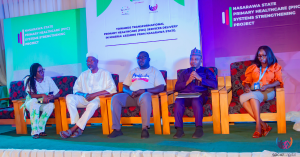
Stronger Systems, Stronger Care: How Nasarawa is Reimagining Primary Healthcare
Stronger Systems, Stronger Care: How Nasarawa is Reimagining Primary Healthcare...
Read MoreResources
Click links to watch videos
Project Partners

Nutrition International works with ministries of health, partners and other governmental sectors to strengthen antenatal care (ANC) delivered through health systems to support a positive pregnancy experience, improve women’s wellbeing and reduce the risk of anaemia in pregnancy, with the goal of maximizing health outcomes for women and their babies.
Learn More at https://www.nutritionintl.org

Sociocapital Health employs evidence-based insights to address Social Determinants of Health Equity through strategies at patient, practice, and community levels, ensuring equitable access to respectful healthcare for underserved populations. Sociocapital’s mission is to eliminate systemic barriers to critical services and resources, fostering resilience and empowering communities to overcome poverty.
Learn more at www.sociocapital.org/global-health
Learn More at https://www.nutritionintl.org

Sonder Collective blend anthropology, behavioral science, and data science to generate insights grounded in real-world experience. Sonder led the Human centered Design of Adherence Solutions to optimise adherence to antenatal supplements in Northern Nigeria.
Learn More about how they did it here: https://www.sonderdesign.org/projects/pathways-nutrition-supplements
Learn more at www.sociocapital.org/global-health
Learn More at https://www.nutritionintl.org